



5000+ UPSC Selections | 1200+ IAS / IPS Officers
For Counselling Call – 8800222298
Do You want us to call? Fill the Form
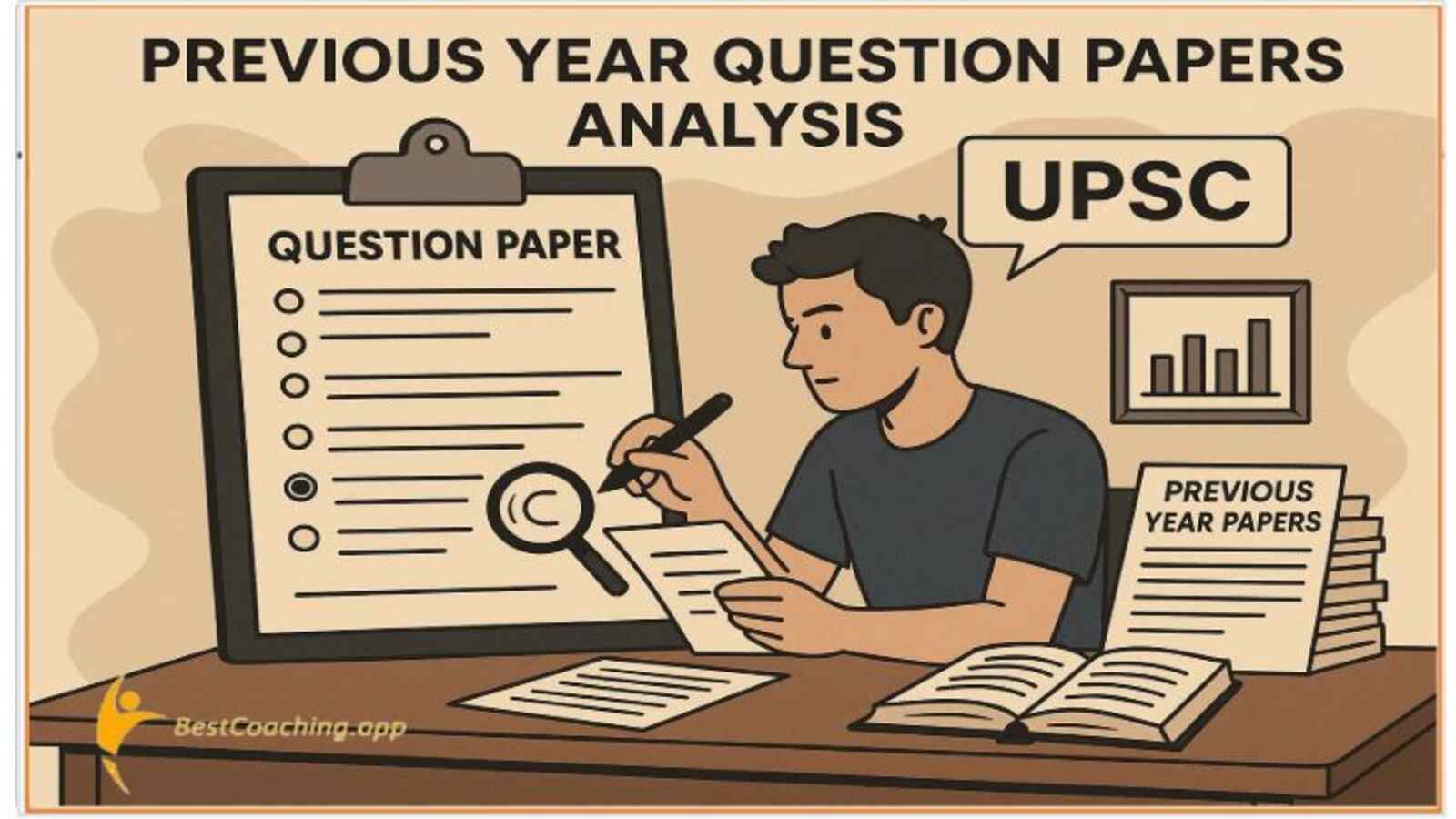
Analyzing previous year question papers is considered by many as one of the most potent methods to crack the UPSC exam. With the UPSC, it is very well said that question patterns are unpredictable, and trends keep changing. Beneath that cloak of unpredictability, however, lies a visible, identifiable pattern with recurring themes, repeated topics, and emphasis on core topics. This is the juncture where the previous year’s question paper analysis helps. In this article, we will get to know about how to prepare for the UPSC exam, and how to analyze previous year question papers analysis?
Why Is the Previous Year Paper Analysis Important for the UPSC Exam?
Every serious aspirant knows that previous year questions act as a mirror into UPSC exam mentality. They bring forth:
Repeated topics
- Important topics from the UPSC syllabus
- The nature of questions—whether factual, analytical, or conceptual
- The level of understanding expected by UPSC
- Mentors at Plutus IAS keep advising students that the analysis of question papers of at least the last 10 years should be a non-negotiable part of UPSC exam preparation
Procedure to Study Previous Years’ Questions of the UPSC Exam
1. Categorization of Questions by Subject and Topic
First, get the question papers of the Prelims and Mains of the UPSC examination. The classification should first be according to subjects, such as Polity, Economy, Geography, History, Environment, etc., and then be further divided by topics. For example, Polity questions can be classified into Parliament, Judiciary, Constitutional Bodies, etc.
Plutus IAS offers students specially designed charts and tabular formats for this purpose to make the process of pattern recognition perceivably easy and quick.
2. Identify Repeated Topics
One of the main benefits of this exercise from past question analysis will be the recurring theme. For example, in recent times, Environment and Ecology questions have increasingly appeared in the UPSC Prelims. Similarly, for Mains Ethics subjects, repetition occurs on topics such as integrity, probity, and public service.
Plutus IAS trainers advise students to mark these high-frequency topics and keep revising them of their interest.
3. See How the Questions Are Framed
UPSC does not consider tests of mere facts. Instead, the test is for comprehension, application, and judgment. Analyze how questions are framed: are they asking for facts, reasons, implications, or critical evaluation?
Mistakes To Avoid While Doing UPSC Exam Paper Analysis
Skipping Explanation: Do not limit marking right or wrong answers. Understand why the answer is right.
Not Mapping with the Syllabus:
Every question should correspond to some topic mentioned in the UPSC syllabus, so one can analyze how deeply this topic has been covered.
Ignoring the Change in Trend:
Watch how the changes are taking place in the style of questioning. Plutus IAS changes its approach every year based on the latest UPSC exam trends.
How Plutus IAS Makes UPSC Exam Paper Analysis Easier
Plutus IAS is a big name when it comes to civil services coaching. With their mentorship approach, students never waste their time reinventing the wheel. Some of the distinctive features of their UPSC exam question analysis approach are:
- Topic-wise breakup of all questions from the last 10 years
- Weekly workshops on question paper trend analysis
- Examiner-like comments on mock answers based on past year papers
- Integrated test series on the exact pattern of the UPSC exam
Conclusion:
Analyzing past question papers is not just a clever way to prepare; it is a must in clearing the UPSC exam. Doing so helps align your preparation with what the examiner expects, putting emphasis on what really matters and eliminating uncertainty that usually clouds such a competitive exam.
Related Articles