


5000+ UPSC Selections | 1200+ IAS / IPS Officers
For Counselling Call – 8800222298
Do You want us to call? Fill the Form
Preparing for the Civil Services examination is not less than a marathon. It requires consistent hard work and the best resources for better preparation. In India, there are thousands of aspirants who are preparing for it and also exploring the best guidance and support. In this article, we will find out what the recommended Preparation strategy is for the UPSC exam, its structure, and more. Here is a fine article on the Preparation strategy for UPSC.
Knowing the UPSC Exam Structure
Before progressing toward the preparation plan, it is crucial to know the structure of the UPSC Civil Services Examination (CSE). The examination is held across three different stages:
Preliminary Examination – Objective type (General Studies I and CSAT)
Mains Examination – Descriptive type (9 papers including Essay, GS I-IV, and Optional subjects)
Personality Test – Personal Interview/
A proper strategy for preparation must take into consideration the specific requirements attached to each stage.
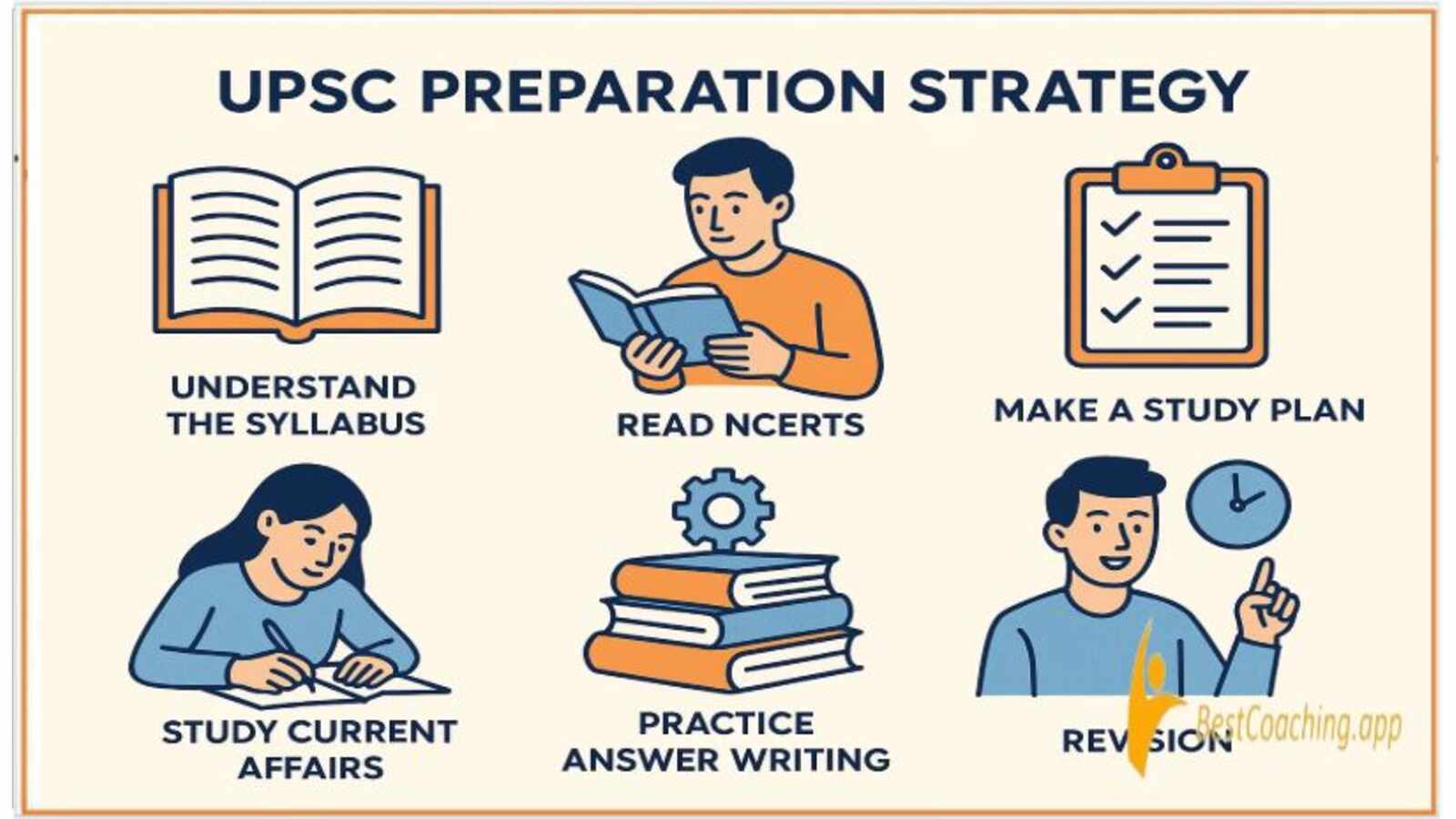
Step 1: Get the Basic Foundation Right with NCERTs
The foremost and essential step in the entire preparation phase is the development of conceptual clarity. NCERTs from classes 6 to 12 provide a clear and concise understanding of the subjects under History, Geography, Polity, Economics, and Science.
What makes NCERTs precious?
- Easy to understand
- Trusted and reliable
- Covers Prelims and Mains prep
Once NCERTs have been done with, then come the standard books such as Laxmikant for Polity, Spectrum for Modern History, and G.C. Leong for Geography.
Step 2: Creating a Realistic and Disciplined Time-Table
Time management stands tall among all pointers in a successful prep strategy for UPSC. Without a timetable, no matter how hardworking an aspirant may be, he gets overwhelmed due to the vast syllabus. An ideal study plan creates an ambiance of order and discipline in your daily life and ensures that each subject receives adequate attention.
Institutes like Plutus IAS provide predesigned and flexible study plans for every stage of the UPSC preparation cycle, according to the student’s needs. The students are thereby kept consistent by their approach in organizing and managing their time and agendas, and so the incidence of procrastination goes down. However, apart from syllabus coverage, an evenly balanced timetable assists even in gaining confidence when kept counting till the progress made from day to day.
Step 3: Giving Due Importance to Current Affairs
An eventful and systematic study of current affairs is yet another vital factor in any robust strategy of UPSC preparation. Once the aspirants have gone through the competitive scenario of Prelims, Mains, or the Interview, their choice of current affairs will strongly fortify testing of awareness, analytical ability, and grasp of real-world issues of governance and policy.
Current affairs are fluid and unpredictable, so they are the most challenging section of this examination. So, it is better to read a good newspaper such as The Hindu or The Indian Express on a daily basis. The focus should be on editorials, government schemes, judgments, environmental issues, and international relations. Alongside newspaper
Step 4: Keep Taking Mock Tests
Such tests create the real exam environment and help you improve speed and accuracy. They also highlight your weak areas.
Types of Tests to Take:
- Prelims mock tests (GS and CSAT)
- Mains test series
- Essay mock tests
Plutus IAS is well-reputed as one of India’s best test series, almost in complete alignment with the UPSC pattern, so that students get fully prepared for the real exam.
Step 5: The Right Optional Subject
Being an optional subject has 500 marks; hence, it might have an impact on the final ranking. An optional subject should be chosen by considering:
- What interests you
- What is your educational background?
- Availability of resources
Good guidance
The Position of Plutus IAS in UPSC Preparation
Plutus IAS is a very reputable name in the domain of civil services preparation. The Institute has a strong faculty, provides a mentorship program, and relies on student-focused teaching methodologies designed to help aspirants pursue an effective strategy of preparation for UPSC.
Key Features of Plutus IAS:
- Live and recorded classes
- Small batch sizes for personal interaction
- Daily discussions on current affairs and editorials
- Main answer writing programmes
- Separate doubt-clearing sessions
Conclusion
Success in the Civil Services Examination is a product of the right approach, disciplined execution, and expert guidance. A thoughtful preparation approach for UPSC makes this arduous journey workable, not fun! Institutions like Plutus IAS provide the right environment, guidance, and resources to mold your IAS dream into reality. Adhere to strategy, trust the process, and remember- consistency is the key.
Related Articles