


5000+ UPSC Selections | 1200+ IAS / IPS Officers
For Counselling Call – 8800222298
Do You want us to call? Fill the Form
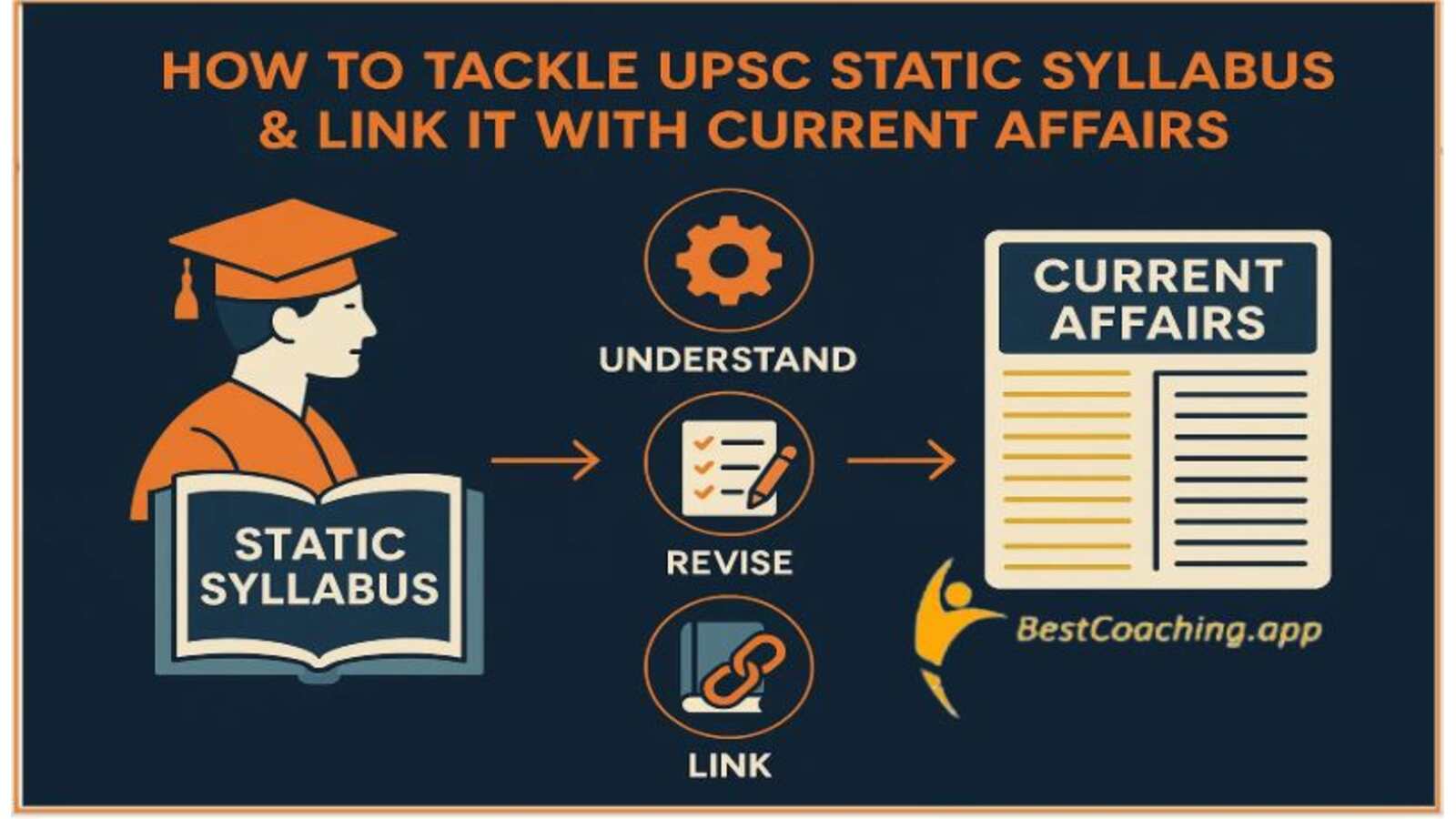
Preparations for UPSC Civil Services Examinations require a delicate balance between learning the static syllabus and updates on current affairs. The key to success lies in understanding the UPSC syllabus along with the integration of current affairs, which promotes the clarity of concepts coupled with real-world awareness. In this article, we will get to know how to tackle the UPSC Static Syllabus and Link It with Current Affairs
In this article, we shall discuss the static portion in an effective manner, how it relates to current events, and why institutes such as Plutus IAS are conducive to multiple preparations for the UPSC.
How to Tackle UPSC Static Syllabus and Link It with Current Affairs
Static Portion in the UPSC Syllabus with current affairs
The static portion in the UPSC syllabus includes subjects and topics that remain constant through time. The nature of such subjects is based on facts, theories, and historical data fixed in time, such as:
- Polity (Indian Constitution, Public Administration)
- History (Ancient, Medieval, and Modern Indian History, World History)
- Geography (Physical, Indian, and World)
- Economics (basic concepts; Planning; Budgeting)
- Environment and Ecology
- Science and Technology (basic concepts)
These topics are mentioned in NCERT-level books and other standard reference materials. Mastery over the static portion lays down the foundation to comprehend and analyze the ongoing developments.
Reasoning Behind Linking the Static Syllabus with Current Affairs
To prepare for UPSC is not just to prepare for a fact-based exam, but rather to test analytical skills and understanding of issues and interlinkages between subjects. Hence, one of the ways to enhance one’s preparation is to juxtapose static topics with current affairs:
- Provide multi-dimensional analysis for GS and Essay papers.
- Answer better with references/examples from current affairs.
- Provide relevant real-life cases for Ethics case studies.
- Provide content for Interviews in the form of issue-based outlooks.
- Let’s see some examples:
- Static Topic: Fundamental Rights
- Current Link: Freedom of speech versus recent Supreme Court judgments.
- Static Topic: Climate Change
Current Link: India’s commitments in the COP summits and climate-related disasters.
This way, you deepen your understanding and add another dimension to otherwise static content.
How to Study the UPSC Syllabus with Current Affairs
1. Static First
Cover NCERTs and standard books for each subject. Without a solid base, current affairs won’t make sense. For instance, you must understand the structure of Parliament before you analyse any bill passed.
2. Daily Current Affairs Reading
Read a good newspaper (The Hindu or Indian Express) daily and keep notes under various topics, not dates. Supplement that with monthly compilations from trusted institutes.
3. Use Current Affairs to Reinforce Static Concepts
Having gone through the static topic, use current affairs to reinforce and supplement your knowledge, either by going through events or personalities that have been discussed in the news or in reports related to the static topic.
4. Practice Writing Answers
Incorporate current affairs into GS Mains and Essay papers. Quoting committees, judgments, schemes, and reports adds significance and credibility.
5. Revision Through Integrated Notes
Make a separate notebook for recording static notes with current examples. It helps during revision.
Role That Plutus IAS Plays to Master UPSC Syllabus Current Affairs
Plutus IAS stands out as one of the best coaching centers where aspirants working towards integrating the UPSC syllabus with current affairs can receive maximum help. Here is how it facilitates:
Integrated Teaching Approach: At Plutus IAS, there is an integration of static with current topics during classroom sessions. For example, when teaching about the Constitution, recent Supreme Court judgments will also be discussed.
Daily Current Affairs Analysis: Their expert faculty prepares daily current affairs analysis videos and PDFs as per their relation to the UPSC syllabus.
Answer Writing Practice: Plutus IAS conducts regular main answer writing sessions where current affairs are related to the syllabus for better analytical depth.
Prelims + Mains Coverage: The test series is presently designed in a way that includes both factual and analytical questions based on recent happenings, thus making preparation holistic.
Conclusion
Mastering the UPSC syllabus along with the current affairs is the concept of preparation in the ever-changing nature of the exam. Static content is the foundation upon which current events provide relevance and depth. Begin by laying out a strong conceptual understanding of topics; then, the ideas behind those topics should start to be applied to current issues.
Institutes like Plutus IAS are pioneers in preparing students to make this connection in an effective way to channel the knowledge into UPSC-level insights.
Related Articles