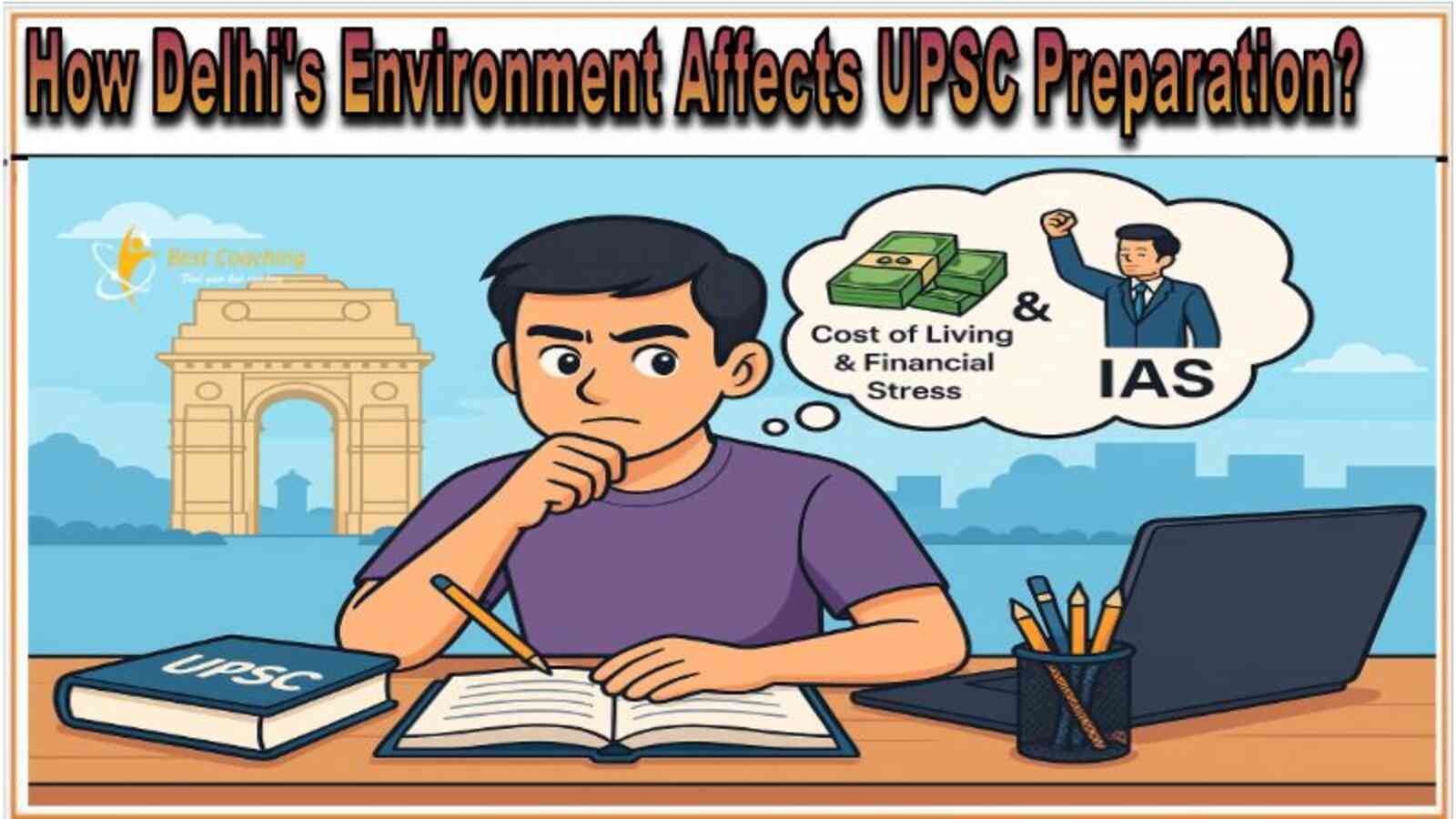



The academic environment of Delhi is, to put it mildly, impassioned and intense-specially at Rajinder Nagar and Mukherjee Nagar. There are top-grade UPSC coaching institutes such as Plutus IAS, Kautilya IAS, AKS IAS, and Drishti IAS that are crushing students with immense pressure, generating a deafening roar of competition that is just not bearable. By this, we mean that it puts a force that is nothing but highly inspiring to many motivated minds that find themselves orbiting it. Then enters the very idea of cut-throat competition-rank and less rank-when some withdrawals do inoculate a dreamer’s journey toward his examination preparation. The article will analyze how Delhi’s Environment Affects UPSC preparations, outlining the pros and cons.
Access To Resources: A Double-Edged Sword
Delhi has an edge over other resource hubs for UPSC candidates; NCERT books, standard reference books, magazines, test series, mock interviews, handwritten notes- everything is within easy reach, literally. Bookshops in Rajinder Nagar and the renowned ”Bookland” in Mukherjee Nagar will tell you where you can get any desired study material. This much abundance could actually mean trouble as it can lead an aspirant to drown in an excess of options, making decisions about what to follow. Preparation gets fragmented, and confusion as to what sources to follow sets in. The fatigue of too many choices is real when 20 options face one about a single subject.
living Condition & Health Concerns
Most candidates who travel in Delhi are found within the nominal budget lodging options like PGs, rooms for rent, or hostels. Bath and toilet facilities, according to the choice, are available. These accommodations are very economical yet have little ventilation, hygiene, or privacy. If you are sharing a room with others and they have a different sleep or study pattern, you won’t be able to concentrate.
Air pollution is one of the major environmental problems in Delhi. It’s at its height in the city during winters when the air becomes increasingly hazardous. Health deterioration or ailments like respiratory problems, allergy, headache, and general tiredness occur due to long exposure to these the most disadvantageous for offstage preparation of the candidate aspiring for an exam like the UPSC, which requires maximum concentration. The food dilution at PGs and messes is another factor. Bad food means lowering energy and concentration.
Cost of Living & Financial Stress
Residing in Delhi is quite an expensive affair. Coaching fees may vary from a low? 80,000 to? 2,00,000 for the best. Accommodation, food, study material, transport, and miscellaneous expenses can take the average monthly expenses sky-high up to between? 20,000 and ?3 0,000.
Economic pressure creates anxiety and stress for students hailing from small towns or weak financial backgrounds. Many students take up part-time jobs or tutoring to sustain their stay, which cuts deep into precious study hours. Financial load and academic pressure become, thus, a huge challenge.
Distraction And Burnout
Although Delhi provides an atmosphere quite conducive for studying, it has its own distractions: fast-paced city life, supplemented by social media groups, popular coaching classes, and a ceaseless stream of seminars. All these culminate in information overload. Many an aspirant has reached a burnout stage, attempting to do it all, joining every test series, attending every class, and studying every book.
Then again, social isolation is yet another factor. Most students live away from family, and solitary life during UPSC preparation is bound to take its toll emotionally. Although most common, there seems to be very little verbalization of desolation, anxiety, and burnout, especially in cases where the attempts have not brought success.
Opportunities For Growth & Networking
On the sunny side of exposure, there is Delhi. It is here that aspirants can get head-to-head with toppers, attend workshops, participate in mock interviews by retired bureaucrats, and even share study groups with other serious candidates. Not every kind of contact can be made in little towns or online.
Delhi in itself keeps aspirants very updated with all the happenings in current affairs, all government policies, or any other such relevant development-much through events, public lectures, or just by the very nature of their access.
Conclusion:
The environment of Delhi proves to be either a paradise or an abyss for most UPSC aspirants, based on their speed of adapting to the surroundings. The success of an aspirant depends on their ability to maintain discipline and focus while avoiding distractions and choosing the correct path both mentally and physically. The internal environment he creates determines whether he will achieve success or fail during his UPSC journey.
This is all about How Delhi’s Environment Affects UPSC Preparation.
Related articles
Best IAS Coaching In Hyderabad